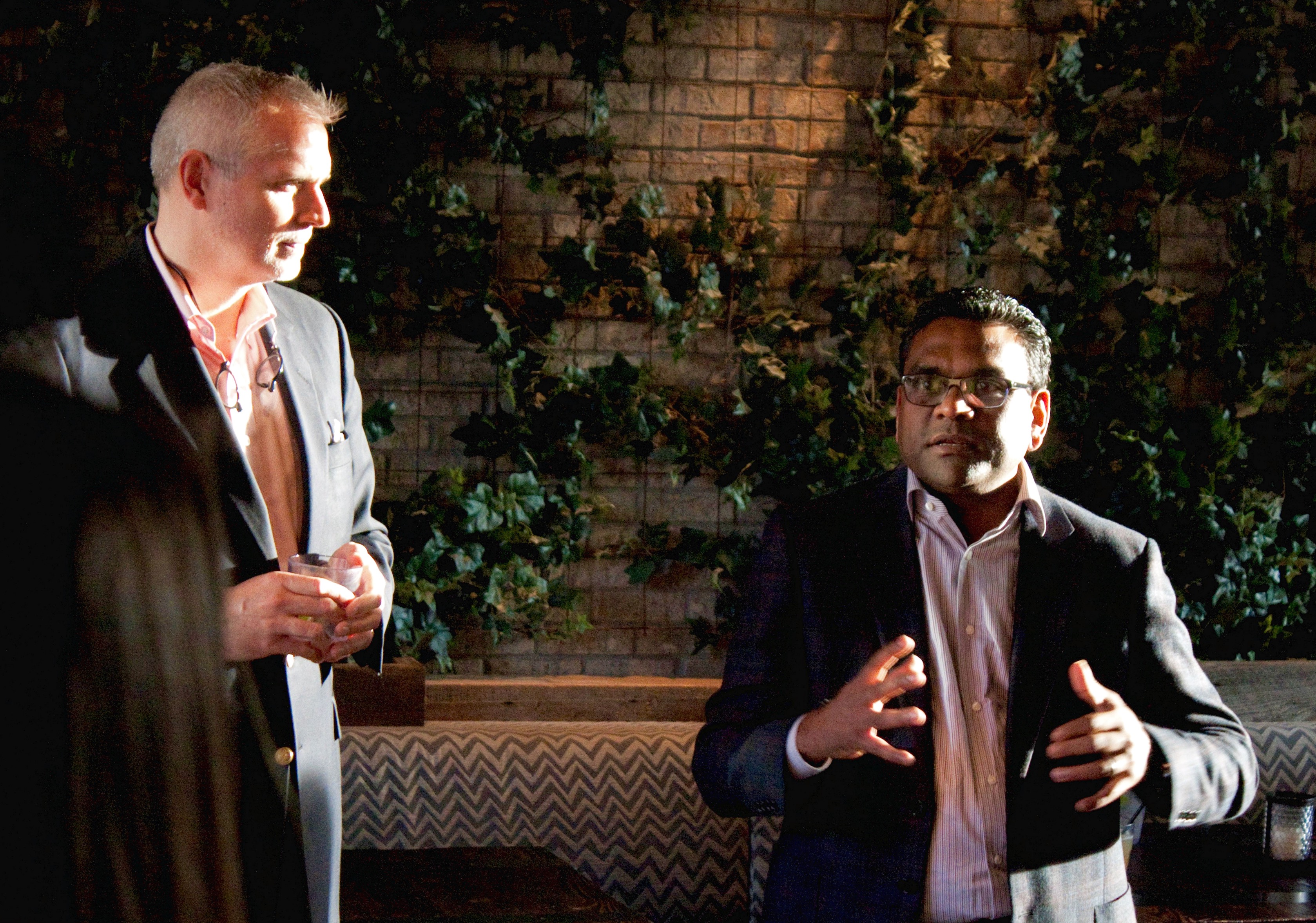
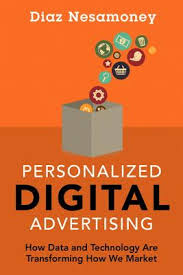
IAB’s Head of Brand Initiatives, Peter Minnium talks with Diaz Nesamoney, author of Personalized Digital Advertising: How Data and Technology Are Transforming How We Market, about this new media darling.
The “right message, right person, right place and time” is the oft-cited Holy Grail for digital advertising. While the industry has made great strides in the latter two, driven by an avalanche of tech and data resources, innovation has sorely lagged in the “right message” area. Until recently, brands have been serving 1990s-style ads with 2015 technology. Today, the capabilities exist to raise programmatic media to its full potential with tech-enabled creative – digital ads that pivot away from restrictive ad formats to become data-driven, dynamic canvases. Diaz Nesamoney, CEO and Founder of Jivox, feels so strongly about the potential that he wrote a book on the topic, and we convinced him to share his views.
IAB: As the founder and CEO of a rapidly growing company, you seem to be busy enough; why did you decide to write a book on personalized digital advertising?
Diaz: For the eight years I’ve been in the digital advertising business, I’ve obsessed about the nearly complete lack of automation and technology applied to creativity. Over the years, there’s been more and more technology coming in to play in some parts of digital advertising, such as media, and woefully missing in others—particularly in the area of creative and delivery of creative. When I was approached by a publisher to publically address this issue, it was too good to be true. I jumped at the chance.
IAB: The first part of the holy trinity for digital advertising – Right Message, Right Person, Right Time – has been neglected for a long time. Why is the emphasis changing now?
Diaz: The industry’s focus on programmatic buying and selling yielded critical strides forward in terms of scale and efficiency, but took us significantly backward in terms of creativity, suggesting that scale and content were inversely related. Big Data is proving that proposition to be patently false. We now have phenomenal amounts of data to play with as marketers. Two years ago, there was no such thing as a wearable health band, the iWatch, or Nest but now here we are and users are engaging with a plethora of devices that generate all sorts of data. People are willingly offering it in exchange for personalized experiences. So, in one fell swoop, we can change the value proposition of digital advertising and deliver 21st Century creativity at 21st Century scale.
IAB: I am very interested in the second part of this, around the plethora of data that is now available. How do marketers turn this Big Data into actionable signals that tangibly drive creative decisioning and serving? Isn’t that a missing link today?
Diaz: It is. It’s almost to a point where you can’t listen to a marketing presentation that doesn’t have the words “Big Data” in it. It’s as though data alone will somehow magically make marketing better. That couldn’t be further from the truth. It’s not really the data, in itself, that has value but rather the ability to harness data to create personalization. The missing piece has been data applications — how to tap into data to use it as a trigger.
IAB: Help me understand the definition of “personalized digital advertising” and how it differs from DCO (Dynamic Creative Optimization)?
Diaz: The idea of creative optimization itself is not new. In the beginning of web advertising, we knew absolutely nothing about users. In fact, the web was all about being anonymous back then; A/B testing was king, i.e., trying different variations of creative, seeing how users respond, and then picking the one that works best. Next, we went to a cookie world in which there was a potential to do something more interesting. This was the birth of DCO. Today, however, we are seeing a significant inflection point: we’re data rich and have a much more complete view of the user, not just “they went to my website and I can re-target them” or optimize creative somehow to perform better—but now I actually know their preferences, where they are and what they’re likely to respond to. So I can craft and scale very precise messaging to them. That is the difference between personalization and DCO: personalization is about having the 360º view of every user, using a broad set of data, and creating unique ad experiences for each of them.

IAB: In your book, you put forth what I think is a very provocative point of view that tailoring your audience to your advertising is less efficient than targeting your media very broadly and tailoring the message to the individual?
Diaz: Audience targeting is useful up to a point, but the audience segments available today still require a “spray and pray” approach — throwing a lot of stuff out there and hoping something sticks. If you take a single product, such as an automobile for example, you and I could be considering the same car, but end up buying it for entirely different reasons that have to do with our personal tastes, what kind of sports we engage in, and where and how we drive. There are many different things that lead up to our decision to buy, so why should we be marketed to in the exact same way? We both belong to the same audience segment broadly speaking: professional men of a certain age group, but what does that really tell us? If you don’t have any other choice, certainly audience targeting is better than nothing, but I think technology and data are coming together to do better, to say, “This is specifically what we want to tell Peter because we know what Peter likes and what he doesn’t like.” It’s not unlike walking into your favorite restaurant where the maître d’ knows you, knows that you like to sit at the back of the restaurant, knows your favorite drink. You like that. People like that. People these days almost expect it. Technology is allowing us to do it at scale.
IAB: From a practical standpoint, what three things does a marketer or agency need to do, or start doing tomorrow, to take advantage of the capability to truly personalize digital advertising?
Diaz: First, start small. Yes, you can use many, many data sources and create intricate logic trees, but rather than get caught up in analysis paralysis, first take a small step forward by using whatever you have that’s easily available and go from there.
Second, embrace technology. Without the automation and the scale, it will end up being an incredibly frustrating experience for everybody involved. This has been the past experience with DCO, which is probably why it hasn’t really come together the way it obviously should have.
Third, be careful what you measure. DCO was optimized for direct-response and clicks. Personalized advertising can have an impact well beyond these rudimentary actions that have led many to underestimate the value of a relevant, well-timed ad to register in somebody’s mind. Personalized advertising has a broader impact, changing attitudes and perceptions as well as behavior over time. These impacts are harder to measure. I am not saying that they can’t be measured, but rather that we should not be using traditional click metrics to measure the success of personalization.
IAB: Thanks, Diaz, and good luck with your book.
For more information and a deeper dive into programmatic creative, register for “Programmatic Creative: Fact or Fiction,” to be held in the IAB Ad Lab on July 15, 2015, 5-7PM.