With the explosion of smartphones and tablets, these small screen wonders are taking up more of our time and attention. In the realm of traditional television these new devices may seem threatening, an unwelcome distraction from the dramas and reality–not to mention commercials–TV serves up.
But these tiny screens offer a new frontier to interact with audiences and may be able to actually draw viewers deeper into their television experience rather than detract from their impact.
The IAB panel led by Joe Laszlo, Senior Director of the IAB Mobile Marketing Center, explored this tricky subject during a discussion called “Tablets and TV: Mastering Twin-Screen Opportunities.”
The panel, which was held at Hulu headquarters, was comprised of a diverse set of experts from all over the media industry: Geoff Katz, Vice President of Business and Development & Marketing for Watchwith; Neel Ketkar, Senior Director of Platform Products for FOX Broadcasting Company; Michelle Kramer, Vice President of Digital for Warner Bros. Media Research; and Dounia Turrill, Senior Vice President of Insights for Nielsen.
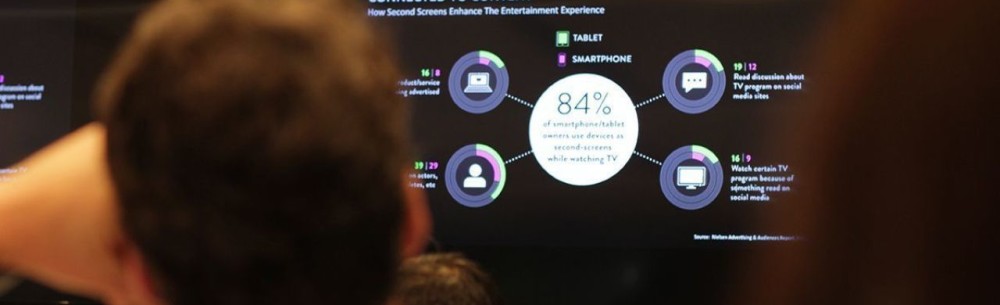
With this heavy arsenal of brainpower, the panel tackled the topic of the second screen phenomenon, when viewers surf their tablets or mobile phone while they watch television. According to Nielsen, 84 percent of tablet and smartphone owners engage in “twin screening.”
“Each month consumers are spending more and more time with content, both video content and just digital content with social media, with email, with looking up products, services, characters, actors,” Turrill said.
“It’s something to think about in the long term, but at this point it’s really interesting because there is so much you can leverage in that second screen environment.”
Some might think twin screening might prove overwhelming for viewers, only allowing them to pay attention to one thing at a time. But Kramer said people, particularly the 20-somethings of the millennial generation, have a surprising capacity for multitasking, as shown in testing done by Warner Bros. in which they hook up volunteers to determine where their eyeballs are focused and monitor viewers’ physiological reactions to TV content in different conditions.
Kramer said though it seemed like people weren’t paying attention while browsing on small screens, participants always kept an ear out for jokes or audio cues and would immediately re-engage.
“One of our big takeaways was there may be two screens but one soundtrack,” Kramer said.
She said that has provided a useful insight when Warner Bros. is developing support apps for their content.
But these branded apps are a tightrope walk and media companies have to find the right balance between offering too much content, not enough and just the right kind, said Laszlo.
Syncing to broadcast companion apps works great for live shows like “American Idol” that thrive on audience interaction. But for first-time scripted broadcasts, these apps can distract from plot points and jokes viewers don’t want to miss. According to Nielsen stats, however, looking up more information on characters and actors was the most popular activity for second screen surfers. Making companion apps is a balancing act developers still have to calibrate.
Fox’s “Cosmos: A Spacetime Odyssey” found a good mix. The app didn’t engage audience members during the show, which would distract from its gorgeous tour of our universe. Instead, between episodes it treated viewers to breathtaking photos, a “cosmic calendar” and extra videos to keep them connected through the week.
The newly discovered digital territory remains mostly uncharted and it’s up to media companies to develop best practices. There are plenty of shows on the horizon that will experiment in this new twin screen ground.
One show the panelists said will be interesting to watch is ABC’s upcoming singing competition “Rising Star.” Viewers download the free app and use it to vote live to determine whether performers move on. Votes are tallied in real-time and profile pictures of voters will fill a three-story wall behind the singer.
But if the show succeeds or not is in the tea leaves for now. Even though we’ll have to wait to see if the show flies or fails, Turrill said the show has a great payoff for audience members to participate – a chance for viewers to get their faces on TV is very compelling.
With all these new ways to engage with viewers come many pitfalls. And engagement that seems too forced or inauthentic will damage properties rather than help them. A Twitter backlash can sink a product in just a few hours.
“Hashtags are not engagement,” Katz said. “I still see a phenomenal amount of bad hashtags.”
Over time we’ve seen hashtags devolve from a way for users to search and find content to bad taglines.
But no matter the engagement, companies must remain authentic to their viewers. When they start to think of their audience as levers to be pulled is when they start to lose them.